



Drivers w/ rear wing/spoiler experience inside please
 Drivers w/ rear wing/spoiler experience inside please
 Am in the process of chosing a rear wing for road course track days. Have narrowed it down to (2). One sits 13" above the deck, is 57" wide & has a little bit wider wing. The other sits 5" above the deck, is 57" wide & has a bit narrower wing. Is there a destinct advantage to using the wing that sits higher on the deck w/ the wider wing? Am leaning toward the lower, slightly narrower wing unless the taller one has a measurable advantage. Am also thinking that the taller wing is gonna create more drag in the straights, which is a minus. Thank-you in advance for your comments.
Wing will be mounted to a removable deck lid & will be used on track days only. So am not concerned about the gawdy look.
Wing will be mounted to a removable deck lid & will be used on track days only. So am not concerned about the gawdy look.

TECH Regular
Joined: Mar 2006
Posts: 471
Likes: 0
From: Rolesville, NC
aerodynamic aids are not bolt on and go. Unless you can do lots of testing and testing, string ends/ wool tuffs tapped to the car or oil drops or you have access and money for a wind tunnel time. stick with a small 1" 45* spoiler.
A wing would require a front splitter, plus side skirts and testing time
Wings, acuttly slow your car down on straights.
my little 1" spoil slowed my top speed on one particular straight by 5 mph, but did pick up corning speed by more then 5 mph and lower lap times.
I did spend lots of time with mineral oil drops on different parts of the car to see the wind patterns over the body work. Plus lots of right height adjustments.
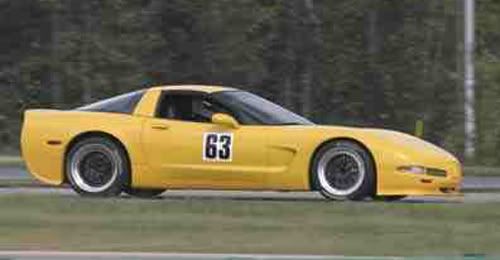
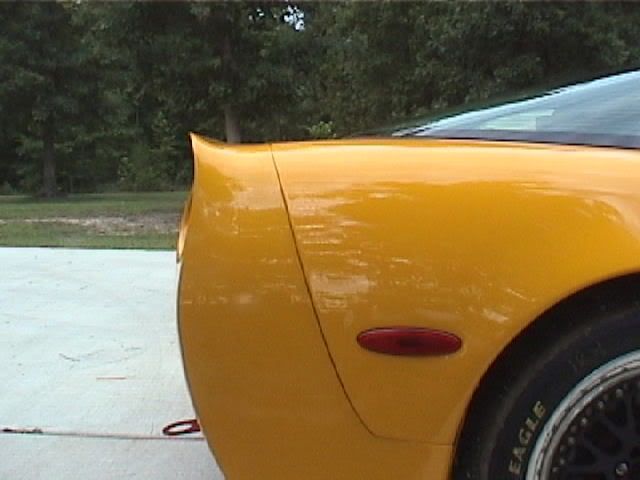
Plus there are many links about aerodynamics on race cars.
http://www.nas.nasa.gov/About/Education/Racecar/
A wing would require a front splitter, plus side skirts and testing time
Wings, acuttly slow your car down on straights.
my little 1" spoil slowed my top speed on one particular straight by 5 mph, but did pick up corning speed by more then 5 mph and lower lap times.
I did spend lots of time with mineral oil drops on different parts of the car to see the wind patterns over the body work. Plus lots of right height adjustments.
Plus there are many links about aerodynamics on race cars.
http://www.nas.nasa.gov/About/Education/Racecar/
Why do you sometimes regret the front splitter; performance issues?
Just 10 minutes ago & by some miracle, I found a stock front air splitter for my car. The front splitters are near impossible to find @ a decent price.

TECH Resident

Joined: May 2004
Posts: 792
Likes: 2
From: SoCal
What are you trying to fix by adding a splitter or wing? Is it for the Miata in your sig? Is there something that the Miata racers find aero common? Example: 914 Porsche racers generally find a high mounted rear wing adds a tremendous amount of high speed corner stability which easily outstrips the drawback of increased drag. The rear of a 914 tends to lift at speed.
Any benefits would have to be verified by a lot of track testing which is best done in a well organized and methodical manner (very much like chassis/suspension setup), IMO. The stopwatch is your friend.
Andy1
Any benefits would have to be verified by a lot of track testing which is best done in a well organized and methodical manner (very much like chassis/suspension setup), IMO. The stopwatch is your friend.
Andy1
TECH Regular
Joined: Mar 2006
Posts: 471
Likes: 0
From: Rolesville, NC
Had to make changes to get enough air though the radiator opening to keep the engine and oil cool enough.
Before stock with 3" air opening
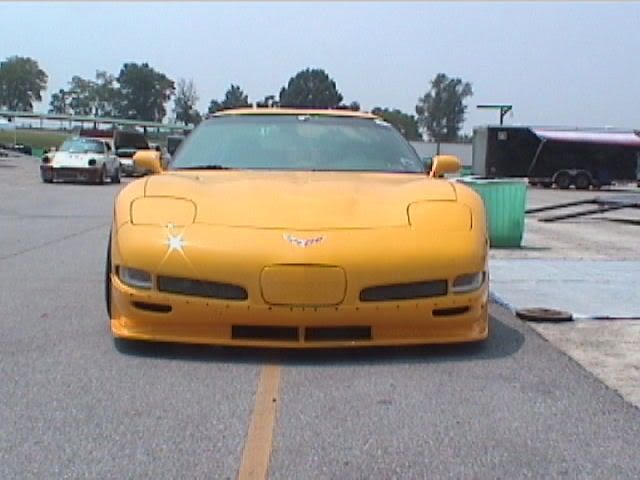
Now with 5" air opening and no longer have high temps
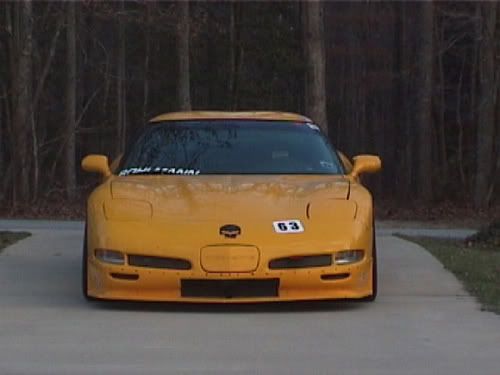
I also run a front diffuser underneath
Still have some lift problems too much air in the engine bay, makes the hood like a parachute But a extractor hood and vented wheel wheels should help that.
Trending Topics
What are you trying to fix by adding a splitter or wing? Is it for the Miata in your sig? Is there something that the Miata racers find aero common? Example: 914 Porsche racers generally find a high mounted rear wing adds a tremendous amount of high speed corner stability which easily outstrips the drawback of increased drag. The rear of a 914 tends to lift at speed.
Any benefits would have to be verified by a lot of track testing which is best done in a well organized and methodical manner (very much like chassis/suspension setup), IMO. The stopwatch is your friend.
Andy1
Any benefits would have to be verified by a lot of track testing which is best done in a well organized and methodical manner (very much like chassis/suspension setup), IMO. The stopwatch is your friend.
Andy1
Hi Andy1,
Am not trying to fix anything. Am trying to learn. For example: It took me approximately 3 years AFTER finishing the Miata build to learn how to dial in the engine, trans, rear end, brakes & suspension. The car is now far superior to what it was when I thought it was finished (after the build). The car is soley a street/road course car.
So, the next area that I'd like to learn how to improve is aerodynamics. Plan to learn the same way; trial & error, asking questions, making more mistakes than improvements...etc.. The car is a rolling experiment (for lack of a better term), as are many of the cars on this site. It's interesting to me to learn how to improve each area of the car & aerodynamics are next in line.
Thanks for the reply.
LS1 Tech Stories
The Best V8 Stories One Small Block at Time

Topdon ONE vs. Artidiag 800 BT2: Which is the Diagnostic Tablet For You?
Pouria Savadkouei
Gas Monkey Built a 6-Wheel Ferrari Testarossa With a Corvette LT4 Engine
Verdad Gallardo
7 Most Reliable High-Performance Engines GM Has Ever Built
Verdad Gallardo
Amazing '71 Camaro Restomod Is Modern Muscle Car Under the Skin
Verdad Gallardo
6 Common C5 Corvette Failures and What's Involved In Repairing Them
Pouria Savadkouei
Retro Modern Bandit Pontiac Trans AM Comes With Burt Reynolds' Autograph
Verdad Gallardo
Top 10 Greatest Cadillac V Series Performance Models Ever, Ranked
Pouria Savadkouei
Top 10 Most Powerful Chevy Trucks Ever Made!

Hennessey's New Supercharged Silverado ZR2 Has 700 HP
Verdad Gallardo TECH Resident
Joined: May 2004
Posts: 792
Likes: 2
From: SoCal
Do you have a blog/build thread/WEB site anywhere? I would sure like to see some photos of your car, inside and out.
You've got a lot of motor in that car, so its speed potential ought to be very high. My first thought would be concern of the 4 point cage; is it really adequate for that kind of speed?
You mention street/road course. Those could well be two entirely different cars, so I suspect you would like to strike some kind of balance between the two? Otherwise, a stiffly sprung roadcourse car would be quite unpleasant on the street. Are your suspension bushings rubber, urethane, Delrin, or? Also, camber and toe settings for a track application would also not translate well on the street. Tires?
Sorry for digressing. Perhaps I should refrain from questioning things outside the scope of what you're trying to accomplish, but my motives are virtuous.
Andy1
You've got a lot of motor in that car, so its speed potential ought to be very high. My first thought would be concern of the 4 point cage; is it really adequate for that kind of speed?
You mention street/road course. Those could well be two entirely different cars, so I suspect you would like to strike some kind of balance between the two? Otherwise, a stiffly sprung roadcourse car would be quite unpleasant on the street. Are your suspension bushings rubber, urethane, Delrin, or? Also, camber and toe settings for a track application would also not translate well on the street. Tires?
Sorry for digressing. Perhaps I should refrain from questioning things outside the scope of what you're trying to accomplish, but my motives are virtuous.
Andy1
Do you have a blog/build thread/WEB site anywhere? I would sure like to see some photos of your car, inside and out.
You've got a lot of motor in that car, so its speed potential ought to be very high. My first thought would be concern of the 4 point cage; is it really adequate for that kind of speed?
You mention street/road course. Those could well be two entirely different cars, so I suspect you would like to strike some kind of balance between the two? Otherwise, a stiffly sprung roadcourse car would be quite unpleasant on the street. Are your suspension bushings rubber, urethane, Delrin, or? Also, camber and toe settings for a track application would also not translate well on the street. Tires?
Sorry for digressing. Perhaps I should refrain from questioning things outside the scope of what you're trying to accomplish, but my motives are virtuous.
Andy1
You've got a lot of motor in that car, so its speed potential ought to be very high. My first thought would be concern of the 4 point cage; is it really adequate for that kind of speed?
You mention street/road course. Those could well be two entirely different cars, so I suspect you would like to strike some kind of balance between the two? Otherwise, a stiffly sprung roadcourse car would be quite unpleasant on the street. Are your suspension bushings rubber, urethane, Delrin, or? Also, camber and toe settings for a track application would also not translate well on the street. Tires?
Sorry for digressing. Perhaps I should refrain from questioning things outside the scope of what you're trying to accomplish, but my motives are virtuous.
Andy1
No problem. The car is give & take in reference to the "street/track" car & has been on the road/track since 2004. The suspension bushings are urethane & the wheel alignment is less than it could be for track use. The adjustable coil overs help comfort the street driving, as do the A/C, power steering, Amp, sub-woofer, heavy leather seats, power windows...etc..
The car does not see agressive wheel to wheel racing & visits the track on open track days. Tires? No, I don't run road course slicks. The best street tire I've used are Bridgstone Potenza S0-3's......& of course they haven't been avilable for a couple of years ish. As mentioned, for me it's about experiencing a bit of it all, ie; the build, track time, street car, car shows, car people. To tell you the truth, I've found that the learning & applying what has been learned the area that is enjoyed most....to my surprise. Though I'd be a road course junkie, in the beggining, & found a great hobby in the end.
Anyway, yes, I have learned enough that if I were to build a road course, wheel to wheel racer (short of aerodynamics) it would be much different, probably still a Miata shell w/ a built frame, full roll cage, Delrin, roade course alignment, slicks, no comforts, & probably a 5.3 stroker (although I really don't like stroker's, the extra torque would be a hoot)....etc, etc..
So, I'm in this section to learn what has worked for you guys in the area of aero. American LeMans GT1 & GT2 cars all have HUGE wings, front air dams, & front spoilers. I am surprised about the big wings.
OK guys, please don't be missdirected by my off topic conversation w/ Andy1.
I am very serious about the aero set-up & would like to hear more.
AU N EGL,
What does the diffuser do?
Regarding the extractor hood. I have seen two sides of under hood air extraction applications. One side claims that the hood air vents must be located in the "high flow, low pressure" area on the hood. The other side says that is all BS & simply raising the hood above the cowl seal is more than enough for air/heat extraction.
The "high flow/low pressure" guys make the argument that the engine bay pressure is higher than the "high flow/low pressure" vented area & for this reason, it is the best way to extract under hood pressure & heat. Further, the claim is that the area exposed by lifting the hood above the cowl seal has a greater pressure (low flow area) than the under hood. For this reason, air will enter the engine bay & not extract. Again, the raised hood for extraction guys claim that is BS.
To me, the "high flow/low pressure" argument makes sense & is correct according to the physics. However, I am a newb & would like to hear from you & everyone else whom have been around &/or experimented with this.
All comment welcome & please continue to post up anything that may be related to the airflow side of driving. Am also interested in my comment regarding the American LeMans set-ups. Thank-you
-
TECH Regular
Joined: Mar 2006
Posts: 471
Likes: 0
From: Rolesville, NC
Channels the under side air properly. Not just a flat bottom. this way on corners, air is not just pushed out the side of the car, but actully help hold the car to the ground on high speed cornering.
Also eliminate the little air pockets or holes under the car, whcih act as parachutes
the extractor part of the hood or lovers should be right behind the radiator. so hot air passing though the radiator has a place to escape up over the hood, then over the windshield.
This also alows for great air flow though the radiator and does not capture air under the hood.
Dont wand to open the hood in the low pressure area by the window. sucks in too much dirt
Also eliminate the little air pockets or holes under the car, whcih act as parachutes
Regarding the extractor hood. I have seen two sides of under hood air extraction applications. One side claims that the hood air vents must be located in the "high flow, low pressure" area on the hood. The other side says that is all BS & simply raising the hood above the cowl seal is more than enough for air/heat extraction.
The "high flow/low pressure" guys make the argument that the engine bay pressure is higher than the "high flow/low pressure" vented area & for this reason, it is the best way to extract under hood pressure & heat. Further, the claim is that the area exposed by lifting the hood above the cowl seal has a greater pressure (low flow area) than the under hood. For this reason, air will enter the engine bay & not extract. Again, the raised hood for extraction guys claim that is BS.
To me, the "high flow/low pressure" argument makes sense & is correct according to the physics. However, I am a newb & would like to hear from you & everyone else whom have been around &/or experimented with this.
All comment welcome & please continue to post up anything that may be related to the airflow side of driving. Am also interested in my comment regarding the American LeMans set-ups. Thank-you
-
The "high flow/low pressure" guys make the argument that the engine bay pressure is higher than the "high flow/low pressure" vented area & for this reason, it is the best way to extract under hood pressure & heat. Further, the claim is that the area exposed by lifting the hood above the cowl seal has a greater pressure (low flow area) than the under hood. For this reason, air will enter the engine bay & not extract. Again, the raised hood for extraction guys claim that is BS.
To me, the "high flow/low pressure" argument makes sense & is correct according to the physics. However, I am a newb & would like to hear from you & everyone else whom have been around &/or experimented with this.
All comment welcome & please continue to post up anything that may be related to the airflow side of driving. Am also interested in my comment regarding the American LeMans set-ups. Thank-you
-
This also alows for great air flow though the radiator and does not capture air under the hood.
Dont wand to open the hood in the low pressure area by the window. sucks in too much dirt
the extractor part of the hood or lovers should be right behind the radiator. so hot air passing though the radiator has a place to escape up over the hood, then over the windshield.
This also alows for great air flow though the radiator and does not capture air under the hood.
Dont wand to open the hood in the low pressure area by the window. sucks in too much dirt
This also alows for great air flow though the radiator and does not capture air under the hood.
Dont wand to open the hood in the low pressure area by the window. sucks in too much dirt
OK, I have seen cars w/ the louvers in the location behind the radiator, as you have described (alot of turbo guys do that). However, I am confused by the difference in location. There is a company that makes extraction hoods who claims to have tested their design (wind tunnel & road). Their design locates the louvers approx. 3/4 of the way toward the windshield & then more toward the center then the outer edges of the hood. This is the area of the highest flow & lowest pressure above the hood. This area was chosen so that the higher under hood pressure would escape. So, if their design is correct, air & dirt should not enter the engine bay. I will look for their information again. It has little tabs of paper that indicate what is happening in various areas.
Both locations seem correct to me. The location that doesn't seem to be right is the lift the hood @ the cowl version because that area has higher pressure than under the hood. So, this $10 solution is eliminated. Today, found a good deal on a hood that will be used as a track hood w/ extraction,
once enough is learned for me to decide on the louver location.
Can you evaluate the information about the testing & comment, if I post it?
Am also gonna search air diffusing. I have no real understanding of the application as of yet.
Thank-you for the reply.
I read some posts from the extractor hood company rep. They chose the higher point on the hood for two reasons;
-The leading edge of the extractor port is located right on the lowest pressure area of the hood.
-By placing the extraction port in this location, both the radiator & engine bay are extracted of heat & pressure.
He went on further to say that a functional extractor can be located lower on the hood (behind the radiator). They felt like the higher location was better because of the exact location & complete engine bay heat extraction. So, basically they're saying that the irradiated engine/header heat doesn't get vented with the extractor ports in the front location.
Another point that I failed to see is the importance of the scoops designed into the ports that give the exiting engine bay air a nice smooth slope to travel on as it exits the engine bay. They also designed a little lip on the front of the extraction port to create even more of a low pressure area at the front of the port. Here is a pic for reference.
There were a few guys whom questioned the company, stating that ducts would need to run from the raditor to the vents if the vents were located in the higher location. The company responded by stating that because of the low pressure that resides in the area of the extraction ports, no ducts were needed. The air will naturally flow to the low pressure area. The company then backed their statement with conformation from the aerodynamics engineer that was involved in the design & testing. A site member posted his temperature improvements as 6*C lower coolant temperature & 3*C lower under hood temperature.
So, from what I understand, it's an owner's choice type of decision. If the hood were to be on all of the time, I'd choose the radiator location because then rain water would drain between the radiator & engine (if parked outside). The higher port would allow rain water to drain onto the engine.
Am gonna have to think about the final location.
Man........I feel like a monkey on crack after reading about "the proper application of under car air diffision." Geeeeez, it's a miracle that anyone has done it successfully. I wouldn't even know where to start. Only useful part (area with some consistancy) was regarding air diffusion at the rear of the car.

-The leading edge of the extractor port is located right on the lowest pressure area of the hood.
Keeping in mind that I have zero experience & know only what I have read;
The test that is referenced above used what appeared to be 3-4" long 1/4" wide paper strips located all over the hood. Then they drove, testing mainly for high track speeds, & videoed the actions of the paper strips. They claimed to have done some wind tunnel testing as well. The low pressure areas are located where the strips lay down close to or onto the hood (high flow/low pressure).
I am going to do some testing up to 80 MPH ish to see if the areas are similar to what has been tested. Then will build my hood accordingly.
TECH Resident
Joined: May 2004
Posts: 792
Likes: 2
From: SoCal
Lowering under hood temps is probably a good thing if heat is in fact one of your problems. If you opt for extractor(?) it may bring with it some slight changes to air flow over the hood, but that's why you're doing all this, right? Another thing to think about would be the effect of an air dam/splitter on the flow of that under hood air, where the effect of the extractor *could* be altered or negated. Guess the point I'm trying to make is that everythnig works in concert with one another; Just like suspension adjustments, one thing begets another.
It seems to me like you have a vision of how you want to go about aero development, while having some fun while you're at it. You will have to test, and test a lot. Video recording yarn tassels at speed and track testing handling differences will be part of the diet. Good luck, and share your progress with us.
Andy1
It seems to me like you have a vision of how you want to go about aero development, while having some fun while you're at it. You will have to test, and test a lot. Video recording yarn tassels at speed and track testing handling differences will be part of the diet. Good luck, and share your progress with us.
Andy1

Back on the wing discussion have you look at an adjustable spoiler like this (nascar type):

They info on these is here. I think he made a custom one for an RX7 so I'm sure he can make something for the miata.
They info on these is here. I think he made a custom one for an RX7 so I'm sure he can make something for the miata.
TECH Regular
Joined: Mar 2006
Posts: 471
Likes: 0
From: Rolesville, NC
ON a C5 Corvette

The louvers on the side of the hood allow air to escape from each wheel well. Too much air in the wheel well and there is lift, so that air must be evacuated. However, this guy did not cut holes in wheel well liner above the tires but below the side hood louvers.
The center louvers are behind the radiator. too allow the hot air from the radiator to escape, which also keeps the engine cooler, and means more HP.
The louvers on the side of the hood allow air to escape from each wheel well. Too much air in the wheel well and there is lift, so that air must be evacuated. However, this guy did not cut holes in wheel well liner above the tires but below the side hood louvers.
The center louvers are behind the radiator. too allow the hot air from the radiator to escape, which also keeps the engine cooler, and means more HP.